
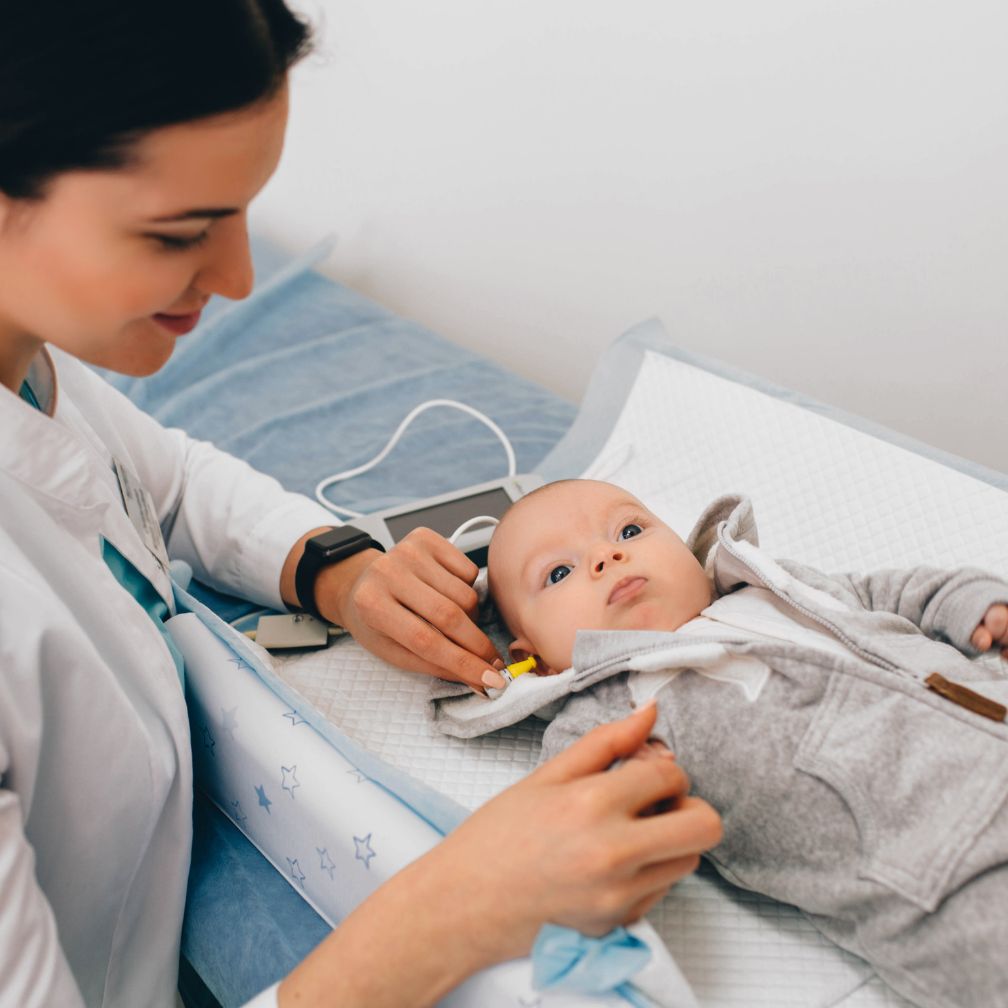
For parents of newborns, realizing their child experiences hearing impairment often feels deeply disheartening and sad. Yet the positive reality is: via timely identification and therapeutic support, children with hearing deficits can genuinely thrive exceptionally. Truly, these infants routinely acquire speech capabilities, relational skills, and strong connections across their social sphere, securing a prosperous life!
Utilizing amplified hearing devices or surgical cochlear units creates two distinct medical options for supporting infants with auditory challenges. In the passage below, we evaluate their specific functions and explain how to determine the best choice for your infant.
Analyzing Infant Auditory Deficits
Congenital hearing impairment in infants often occurs because of diverse root causes, such as:
- Distinct inherited genetic traits (even where ancestral histories show no precedent)
- Active congenital infections including cytomegalovirus (CMV) or German measles
- Acute complications during birth, including lack of oxygen or preterm delivery
- Certain intensive care medications administered in dedicated neonatal care facilities
What stage carries the most weight? Swift medical diagnosis. Because of these standards, babies cared for in United States nurseries receive auditory evaluations prior to leaving the maternity unit. Trained pediatric hearing clinicians advocate for the established “1-3-6” intervention timeline:
- Screened by 30 days of life
- Comprehensive diagnosis finalized prior to 3 months of age
- Early therapeutic care (utilizing personal devices or developmental therapy) started within 180 days of birth
Executing these procedural steps delivers to infants their best chance for flourishing speech, language acquisition, and cognitive health. If you require additional direction surrounding screening protocols, your child’s pediatrician will gladly guide you!
Pediatric Hearing Aids for Young Babies
For young children showing mild to severe auditory impairment, wearable hearing aids frequently remain the preferred initial approach. Specialized, ear-level instruments intensify acoustic waves, empowering infants to catch spoken dialogue and natural environmental sounds much more effectively.
Current pediatric hearing aids function as:
- Completely safe for infants as young as a few weeks old
- Engineered using soft, comfortable ear molds that adapt as the baby matures
- Furnished with child-resistant battery compartments and dedicated pediatric safety elements
- Uniquely adjusted by a pediatric hearing professional to align with your baby’s unique hearing profile
As your baby grows, wearable hearing devices demand ongoing updates to guarantee proper fit and maximum performance.
Advanced Surgical Solutions: Infant Cochlear Implants
If a child experiences severe to profound sensorineural hearing loss and fails to show adequate progress with standard hearing aids, a cochlear device can be prescribed. Differing fundamentally from conventional amplification tools, cochlear implants:
- Require a specialized surgical operation for precise fit executed by a pediatric specialist
- Direct signals past non-functional hair cells within the inner ear
- Process incoming audio into direct electrical pulses that excite the auditory nerve fibers
Cochlear implants are:
- Granted regulatory approval by the FDA for infants reaching 9-12 months of age
- Uniquely successful when reinforced by specialized rehabilitation and consistent family engagement
- Sanctioned strictly following an exhaustive clinical evaluation by a certified audiologist and otolaryngologist
This process includes radiological imaging, specialized auditory testing, and open dialogue concerning long-term communicative results.
Hearing Aids Versus Cochlear Implants: A Direct Comparison
- Mild to severe hearing loss targets Hearing Aids; Severe to profound levels of loss demand Cochlear Implants
- Non-Invasive external placement: Hearing Aids; Surgical internal implantation: Cochlear Implants
- Physical sound amplification: Hearing Aids; Digital electrical impulse transformation: Cochlear Implants
- Intervention starts in early infancy: Hearing Aids; Procedure starts at 9-12 months: Cochlear Implants
Closing Perspective: Choosing Between Hearing Aids and Implants
If your infant is diagnosed with a hearing condition, rest assured that clear options and robust community resources exist to help you. With active assistance from pediatric hearing professionals, numerous children grow to master language capabilities completely equal to their hearing peers.
Whether your baby benefits most from custom hearing aids or a cochlear implant system, taking immediate action can make a lifelong difference.
Have you got specific questions concerning your newborn’s hearing abilities? Contact our staff today for a complete diagnostic review and tailor-made care roadmap.