
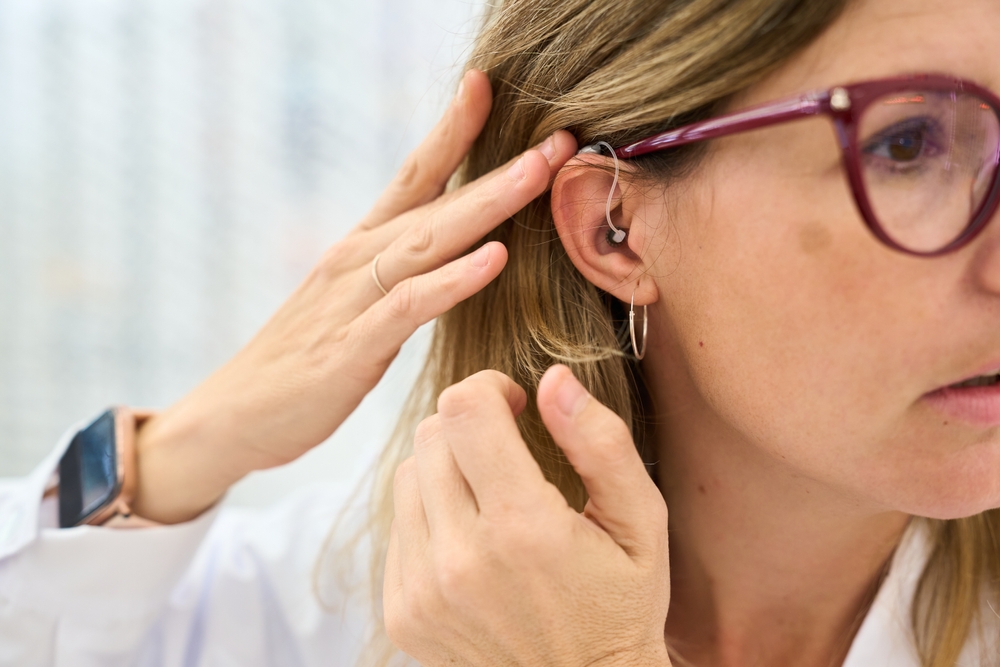
It is incredibly common for individuals to resist getting hearing instruments simply because they dread a bulky appearance or an uncomfortable fit. And that’s completely understandable! In various scenarios, patients expressed fear that wearing an obvious device would cause peers to omit them from casual conversations due to perceived listening limitations.
Consequently, this outdated, negative stereotype persists, preventing numerous individuals from seeking professional care. However, contemporary medical engineering has ensured that current hearing solutions look and function in a completely unexpected manner. Ongoing innovations in cosmetic engineering mean today’s options are ultra-small, seamlessly comfortable, and beautifully hidden from public view.
If cosmetic anxiety has caused you to delay treating your hearing loss, it is highly recommended that you evaluate the sophisticated options now available.
Why the Bulky, Obvious Hearing Aid Is a Thing of the Past
If you close your eyes and picture a hearing aid, you might imagine something large, hooked over the ear, and visible from across the room. Should that be your current expectation, you are inadvertently recalling the clunky designs common to the 1980s and 1990s.
Since that era, the manufacturing landscape for hearing solutions has completely transformed. Exponential leaps in digital circuit shrinking, industrial design, and audio computing have totally redefined contemporary hardware. The resulting devices are beautifully downsized, highly aerodynamic, and built to match lifestyle needs by remaining completely hidden.
Many of today’s devices sit fully inside the ear canal, making them virtually invisible during everyday conversation. Alternatively, post-auricular models are constructed with such streamlined dimensions that they disappear against the scalp, customizable to complement individual skin and hair coloration.
Navigating Modern Hearing Technology: The Three Core Styles Evaluated
To understand how these sophisticated medical devices are physically configured, review this concise anatomical breakdown:
Deep Canal Solutions: Invisible-in-Canal (IIC)
This specific configuration offers the highest degree of user discretion. Engineered to rest deep inside the ear canal, IIC systems are individually molded to match the precise contours of your ear. During typical face-to-face communication, these custom models remain completely obscured from view. This configuration is highly favored by individuals managing mild-to-moderate auditory drops who demand total aesthetic secrecy.
Receiver-in-Canal (RIC) and Receiver-in-the-Ear (RITE) Designs
Statistically, this open-fit design represents the dominant choice among current consumers. A micro-housing rests behind the upper pinna, transferring processed sound via an ultra-fine, translucent micro-wire to an acoustic driver nestled inside the canal. From an aesthetic standpoint, they look very similar to trendy consumer tech or modern bluetooth monitors. Surrounding individuals will remain completely unaware of the technology unless they actively look for it.
Streamlined Behind-the-Ear (BTE) Systems
This style positions the main component body post-auricularly, offering a slightly larger footprint that remains beautifully sculpted and sleek. They’re often recommended for more significant hearing loss and offer excellent performance without the bulky appearance people expect.
The fundamental lesson is clear: current acoustic technology is engineered to integrate seamlessly into your personal lifestyle, never to advertise an impairment.
Advanced Features: Beyond Aesthetics to Smart Technology Integration
The evolution of these medical devices encompasses much more than a superficial face-lift. In the current era, these processors operate like sophisticated wearable computers rather than simple analog sound amplifiers. Many connect directly to your phone via Bluetooth, letting you stream calls, music, or even TV audio straight to your ears with no headphones needed.
Through proprietary mobile apps, patients can effortlessly adjust acoustic thresholds or modify directional settings completely hands-free. Say you’re walking into a noisy restaurant: You can fine-tune your hearing to match the environment in seconds. Advanced rechargeable battery banks have effectively replaced the small, fragile power cells that used to cause immense frustration. The process is as simple as placing the units into their charging dock each night, identical to charging your cell phone.
Dismantling the Emotional Stigma of Auditory Assistance
Even with this encouraging information, taking the initial step toward treatment can induce anxiety. Scheduling an appointment can feel like a profound internal challenge because it represents an open admission of sensory alteration. This can make us feel helpless and like we aren’t fully in control of what’s happening to our bodies.
Let’s reframe this narrative completely: acquiring a modern acoustic instrument is not an admission of weakness. Rather, they represent a proactive response to natural biological evolution—a transition shared by every human being. Adopting this tech is definitive proof that you are actively taking charge of your health to empower and protect your daily cognitive function.
Imagine wearing a discreet, barely (if at all) visible device and finally being able to follow along in conversation, hear better in crowds, and focus on the things that really interest you. That is a magnificent example of reclaiming control over your life!
Discover the Reality of Modern Otolaryngological Solutions
To dismantle old assumptions, the best strategy is to witness these design breakthroughs with your own eyes. We warmly welcome you to tour our practice, consult with our audiologists, and review our product lines with absolutely no financial or purchase obligations. Treat this as a risk-free exploratory step to comprehend the incredible aesthetic shift that has occurred in our field.
You will likely be utterly delighted to discover how microscopic, physically seamless, and high-performing today’s options truly are! Please contact our patient care coordinators or utilize our digital portal to secure your consultation this week.