
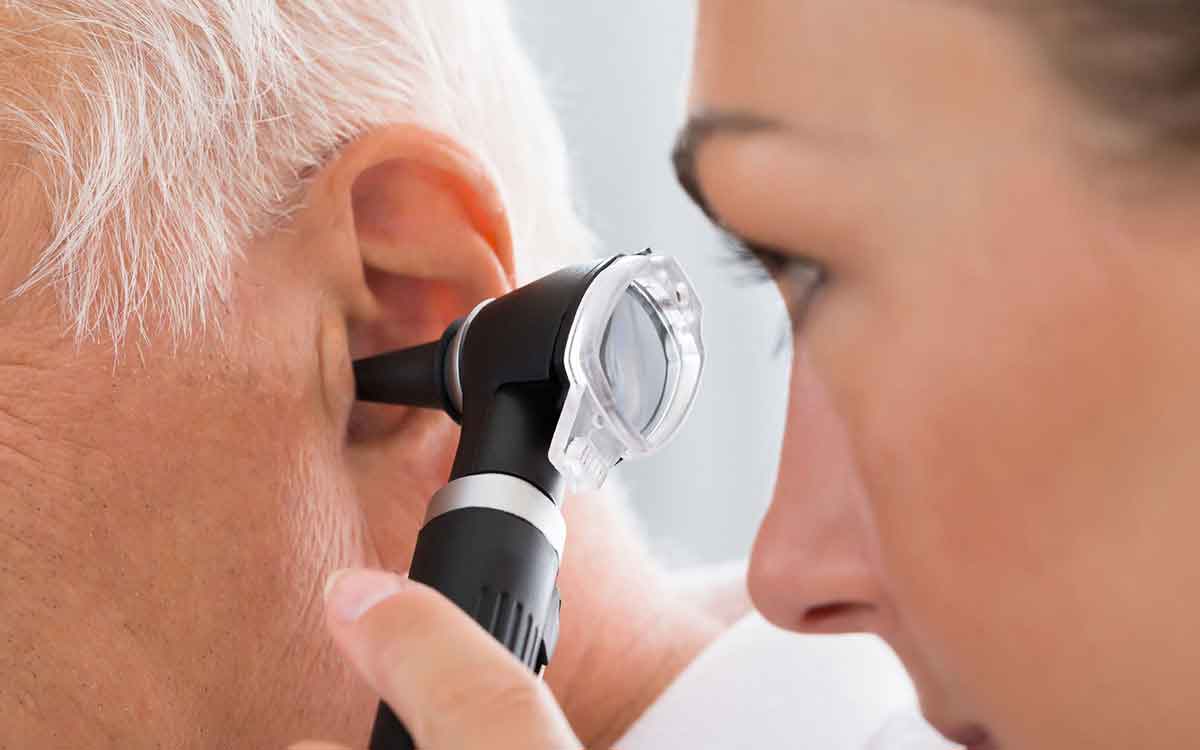
The gradual nature of hearing loss often causes preliminary symptoms to be ignored. Numerous individuals compensate subconsciously by increasing media volume, asking for clarification, or withdrawing from loud settings.
But recognizing the initial symptoms of hearing loss is a priority.
Recognizing Typical Early-Stage Hearing Loss Symptoms
If you notice any of the following symptoms, it is recommended to undergo an audiological screening.
- Impaired speech discrimination during dialogue in loud or crowded environments.
- Frequent instances of asking for verbal repetitions during conversation.
- The perception of muffled or slurred speech where words appear to merge.
- Turning up the volume on the television and mobile devices to levels that others find excessive.
- Decreased perception of high-frequency acoustic signals such as bird songs or doorbells.
- The presence of tinnitus, manifesting as ringing or buzzing in the ears.
- Feeling cognitively fatigued after conversations, due to increased efforts to hear better.
- Retreating from communal environments as conversational tracking feels taxing.
Initial symptoms of auditory decline may appear in unilateral or bilateral patterns and vary in frequency initially. Since the auditory cortex adapts to changes, subconscious adjustments often remain hidden until clinical hearing loss is evident.
Hearing Loss By The Numbers
Data from the World Health Organization suggests that over 700 million individuals will face the requirement for clinical hearing support by mid-century. Other noteworthy statistics include:
- By 2050, approximately 2.5 billion people are expected to experience various levels of hearing loss.
- Over 5% of the world’s population (430 million people) necessitates support to address significant hearing loss.
- More than 1 billion younger individuals are at risk of permanent hearing loss due to hazardous acoustic habits.
- Among those over the age of sixty, more than one-quarter suffer from clinically significant hearing loss.
The Critical Importance of Early Identification
Failure to address auditory decline influences general health and physiological status.
Scientific data has linked hearing loss with higher incidences of social isolation, mental health challenges, cognitive decline, and balance issues.
Recognizing changes at an early stage promotes optimal results and diverse management strategies.
A professional assessment identifies if hearing fluctuations are caused by noise damage, earwax impaction, or different medical factors.
Occasionally, hearing shifts are not permanent and resolve with intervention.
For chronic conditions, the timely use of hearing protection or hearing technology assists in managing the condition.
When to See a Hearing Specialist
An audiological visit is recommended if you observe:
- Clinical indicators remain present for more than several weeks.
- Auditory trouble begins to impact work or daily activities.
- You experience acute auditory decline, dizziness, or chronic ear ringing (this should be evaluated promptly).
Hearing evaluations are noninvasive and supply valuable information regarding your auditory wellness.
We invite you to contact our facility if you feel a hearing assessment is necessary.
FAQ: Early Signs of Hearing Loss
Q: Are all auditory changes linked to getting older?
A: No, while aging is a factor, hearing loss can be precipitated by acoustic trauma, infection, or systemic health issues.
Question: Are there cases where hearing loss is reversible?
Answer: Specific causes, including earwax blockage, may be susceptible to reversal through treatment. Permanent sensorineural hearing loss is typically managed using advanced hearing devices and management protocols.
Question: How frequently should an individual undergo a hearing test?
A: Adults should have a baseline hearing test by age 50, or earlier if symptoms or risk factors are present.